
The Jesus Trail
When things don't go according to plan, hospitality and friendship are a savior

“I think we might meet Jesus,” I gasped. “And not in the way we’re hoping to.” Rodrigo laughed but Xioamin was quite stressed by now and not amused. I was somewhere in between mentally, in that loopy, goofy state one gets late at night when one is exhausted but with good friends. I swallowed. I noticed I was parched. My feet ached and it was very, very dark in the woods all around us. The trail was overgrown. We felt completely alone, there was no cell service and the route our map advised us to take was blocked and completely overgrown — if it was indeed the right route, anyways. There was nowhere to set up our tent to camp and we were almost completely out of drinking water. I looked at my light-up watch: it was nearly 11 o’clock at night. We needed to backtrack, at least a mile, where we saw the last fork in the road that led out to the highway. There was a gas station. From there, we reasoned, we could at least find something, ask someone where we could find a campsite. Together, we steeled ourselves and about-faced.
It all started only a few days before, and at the time, sounded like a great idea. But as with all the best laid plans…
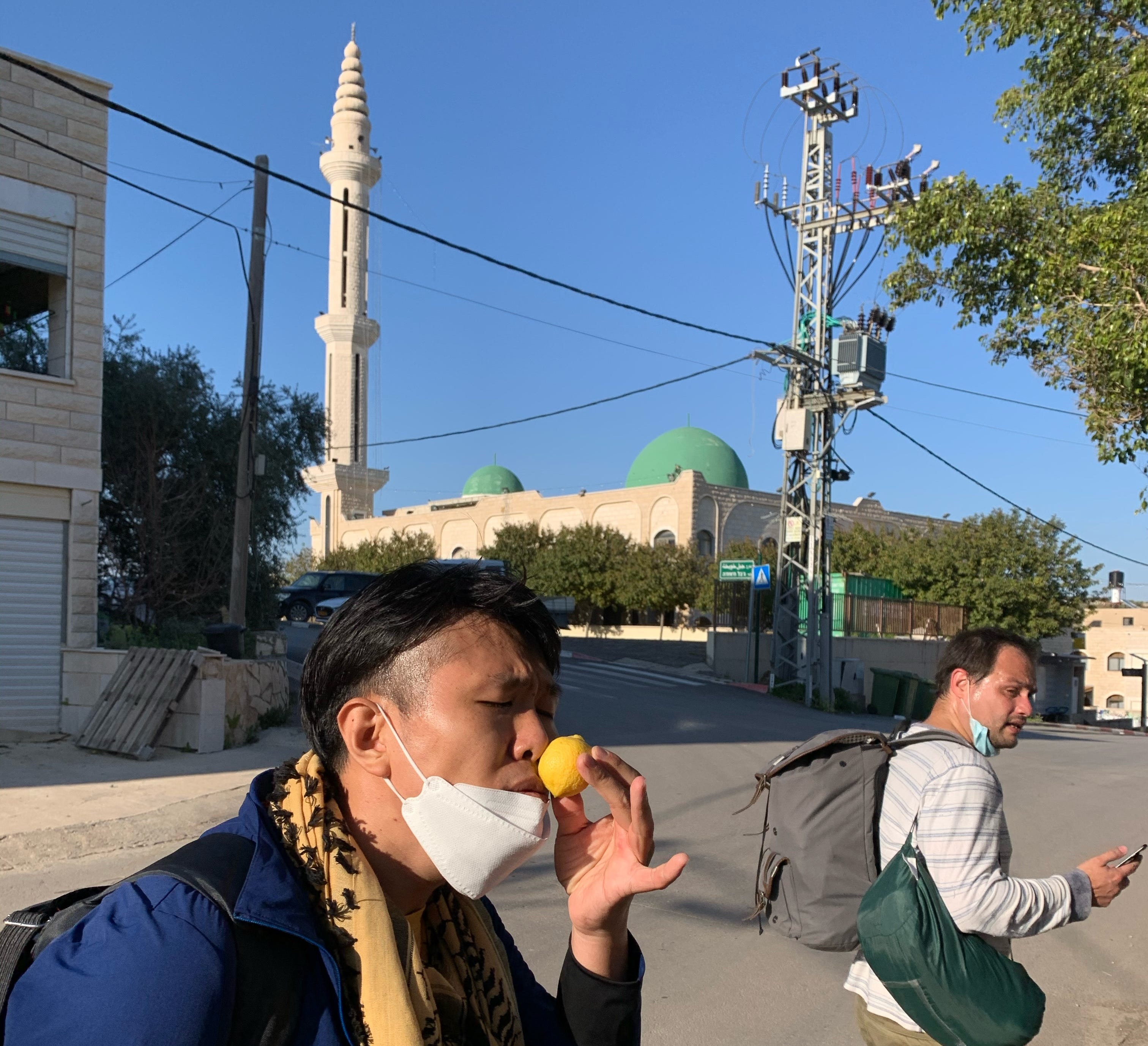
“Let’s do the Jesus Trail!” Xiaomin had exclaimed one day, having stopped by my dorm room at the beginning of our academic holiday for the Passover festival.
Xioamin is an exuberant guy. Tall, energetic, and talkative, he is evidence for my thesis that we Americans and Chinese have more in common than any other two cultures in the world today. Hear me out: we like technology, we like having shiny things, we drink too much, and we are very loud tourists in whatever countries we visit. I joke — we also are both enthusiastic and at best, hospitable, excited to share food and humor. Xiaomin and I spent two weeks locked up together in COVID quarantine, and needless to say, we really bonded and learned more about each-other’s culture and life than either of us had ever known before. (I wrote a bit about that here for Interfaith America).
Kind, thoughtful, and generous, Xiaomin was always up for an adventure — planned or unplanned, prepared or unprepared. A Christian from China, he told me the most interesting and complicated stories about his life and faith: his family had been survived by PRC police for practicing their faith and were forced to meet in secret in house churches to avoid having ministers hand-picked by the Communist Party who’d only preach in lockstep with party directives. He was divorced and had spent the entire previous year since his divorce, before coming to Israel, on a motorbike trip across China. He told me about his dad’s mental health struggles, and I found out in the last year that his dad succumbed to suicide long after Xiaomin returned to Beijing. Xiaomin always said grace before eating, and unlike any custom I’d ever noticed before, he’d place his hand over his heart at the end of his prayer for a few seconds and hold it there — a gesture that conveyed a centered kind of gratitude, which I found really special.
We conscripted our friend Rodrigo, a student from Mexico, to join. He was also game for just about anything.
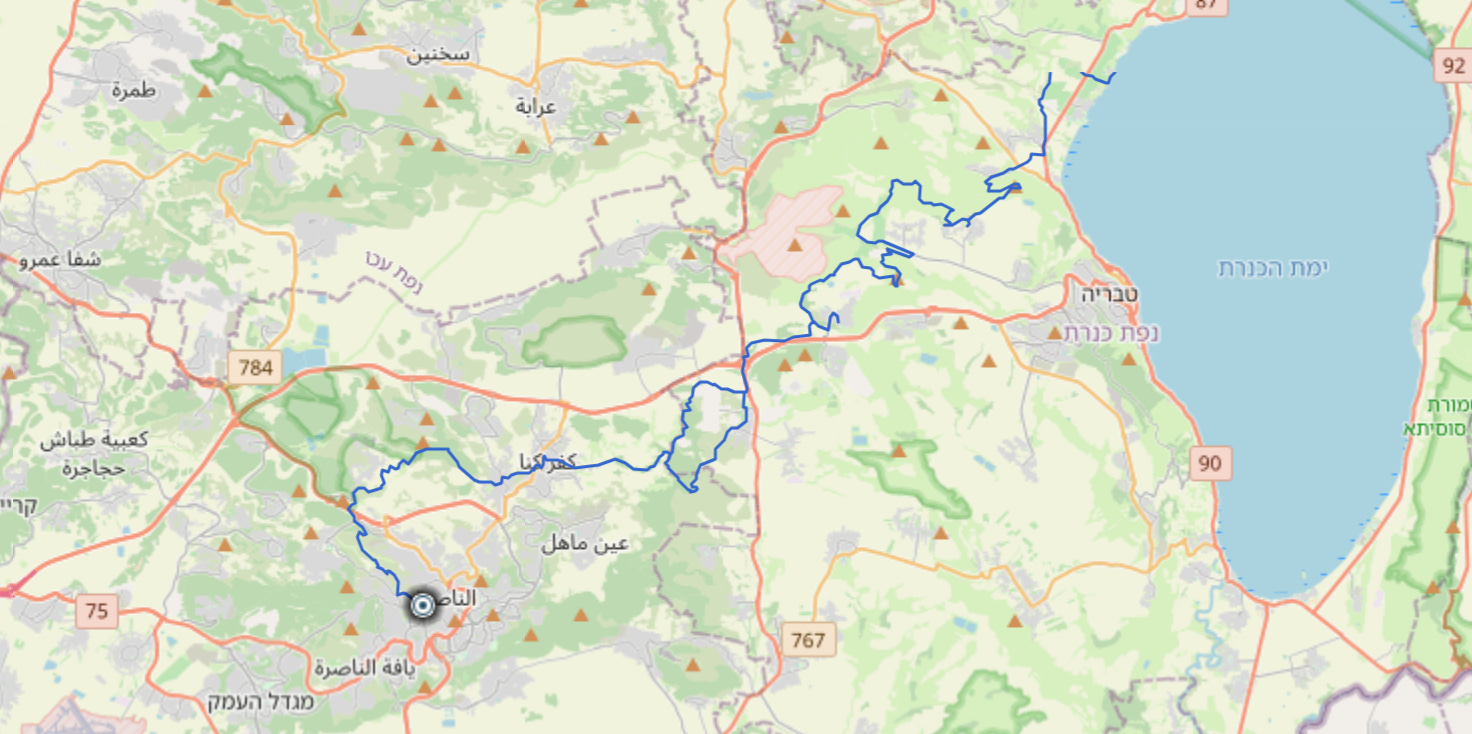
The Jesus Trail — or (forebodingly) the “Jesus Fail” as I would later call it — is a hiking route in the Galilee region, in far northern Israel, that spans from the larger primarily Arab city of Nazareth (which was were Jesus grew up), passes through Cana (where water was turnt to wine), and terminates on the Sea of Galilee near the city of Tiberias (where there is water-walking and lots of Russians, respectively).
Maybe it was because it was early 2021, and the trail hadn’t been well maintained in the time of COVID, but things went south midway through and we got lost bad.
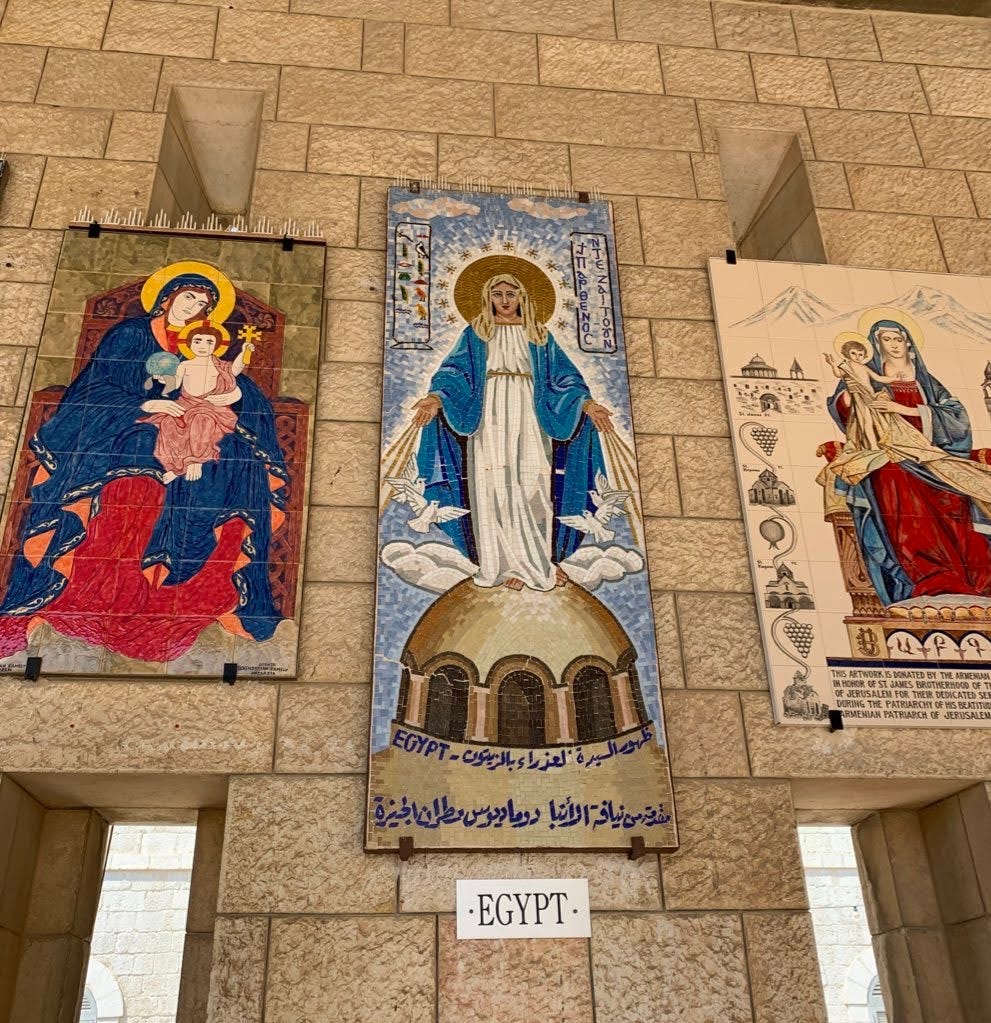
We started in what is probably my favorite city to visit in Israel, Nazareth. The city is in the country’s far north and is predominately Arab and Christian, which has been around since before the time of Christ. Nazareth, presumably a hometown where a prophetic is never accepted, always accepts me with open-arms. I love to history, the warmth and generosity of the people there, and the old city which is full of elevation changes, more staircases than you can count, and narrow, cobble-stone lanes. It’s home to the breath-taking Basilica of the Annunciation, where Elizabeth and Mary shared a tender moment as Jesus and John lept in their wombs, greeting each other in utero. The Basilica, in a gesture that conveys its fervent prayers for Christian unity, has a garden courtyard lined with murals of the Blessed Mother Mary depicted in the custom of dozens of countries across the world. She wears the clothing of Slovenians, Lebanese, Greeks, Poles, French, Chinese and Vietnamese. Messages in Arabic, Hebrew and dozens of world languages proclaim scripture passages calling for peace and goodwill for people of all tribes and nations.
From Nazareth, we passed through Canna, of water-to-wine fame, which today is a small village, predominately Arab and Christian, as much of northern Israel is. We sat in a tea house and sipped from small glass mugs and watched old men sit in the sun playing backgammon and fiddling Islamic prayer beads. Notably, there were more than one church for the same event: the Wedding at Cana, Orthodox Christians from different sects having different purported locations, Roman Catholics having another still.
Somewhere after Canna, known as “Kfar Kana” in Hebrew and Arabic both, we wandered along a dirt road for miles and miles. We passed beautiful farm fields and olive trees, a few people road past us on horse-back. At some point we took a short cut through somebody’s field, where we should not have trespassed on private property. Stickers stuck to my boots and socks and my pack got heavier and heavier as the sun got low. It was such a beautiful land, and it felt powerful and special to traverse it on foot as people had for hundreds of years. It was 2021, still COVID times, and there were few tourists so we had the trail virtually to ourselves. Our packs were heavy but so was our heart laughter. We cracked jokes, and drew lots of attention as people from some of the small Arab towns in north came out of their homes to just wave at us, and one family even invites us into their deserted cafe for a respite (there was no international tourism at this time, so we were very unusual there).
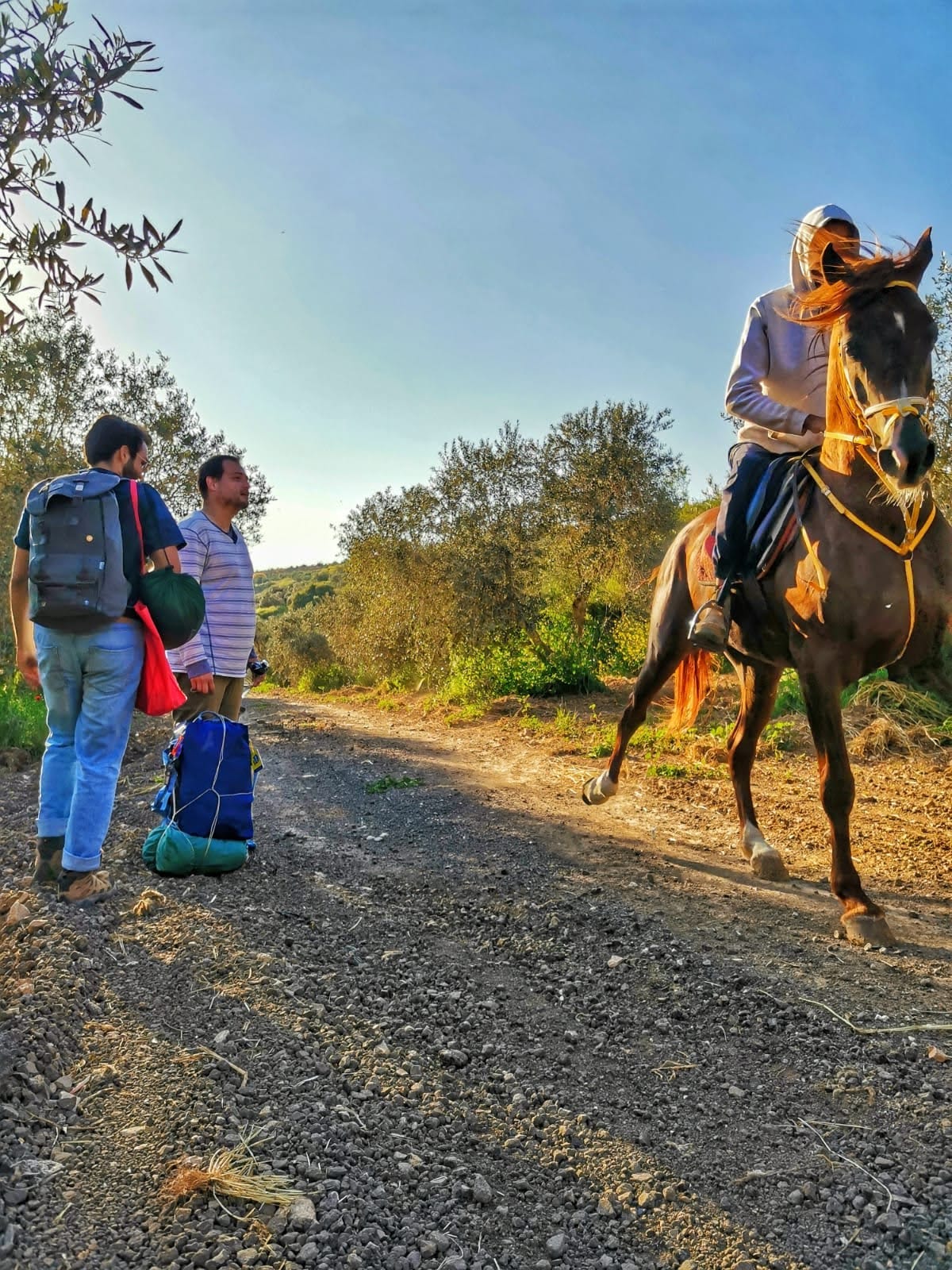
We were dusty and my feet hurt. Xioamin was leading way. He had so much technology, which lent him credibility in my mind. He had an iPhone and an Android, a fancy digital camera, even a drone. He’d pulled up the trail map on his phone and had it printed out as a backup. I just had a water bottle and a sleeping bag and good attitude. So I was happy following. Besides, the whole trek was his idea and he was most gung-ho to see all the Christian biblical sites. But at some point, as the sun hung very low, pink shades stretching across the low grasses of pastures where sheer grazed, the trail turned into leafy woods. We walked and walked and where there was supposed to be a fork, there was only a dead-end. The trail was not well maintained: grass and weeds grew across the path, trees threatened encroachment. Another supposed fork in the trail was in the exact spot of a tall metal fence, closed off to us. We turned around and looked for another way to get to a site to camp. By now, insects had come out, corpuscular singing commenced.
I was getting a big worried, and there was not much water left among any of us. We decided to turn around, look and see if we missed a fork. I was thirsty. It had been miles since we saw anything, although at some point we’d passed a highway. Getting back there would take some doing, however. But we had no choice, without enough water and with no flat surfaces to pitch a tent, and no place felt it was even allowed to camp, we had to turn back.
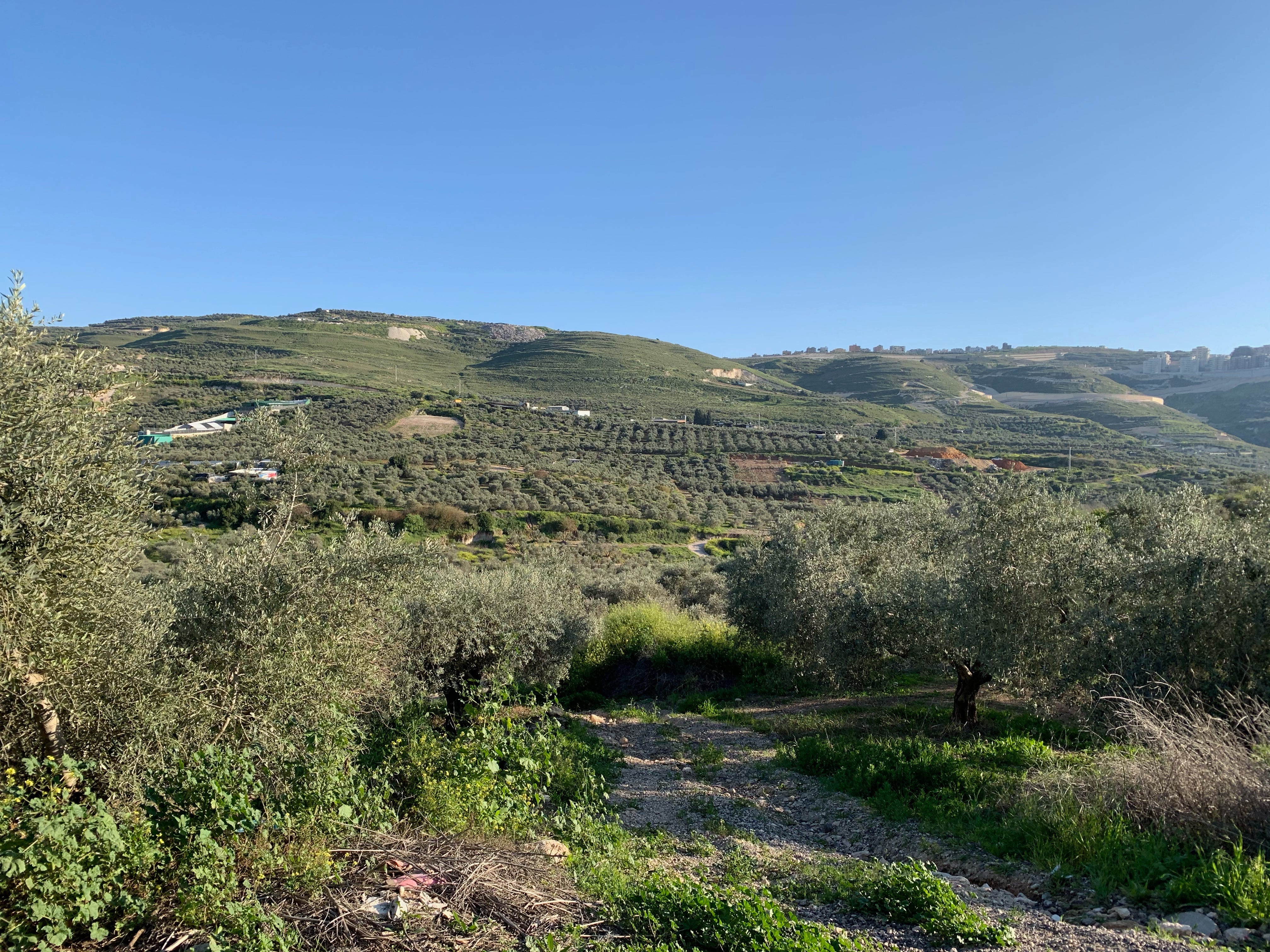
I head howling. Jackals or wild dogs. The hair stood up on the back of my neck. I knew I should have stayed home today, I thought! Rodrigo, for his part, was lightening the mood laughing “Xiao, maybe this is our moment to ask or a miracle. A miraculous hotel.” I had to say, it would be nice to lay my head somewhere other than among the rocks and dirt. “Rodrigo, it’s ok,” he replied. “I know we can find a way. This is not what the guide said, but look here: there is a gas station, Kyle can get water and we can ask them if they know where to camp.” We walked and walked. More howling. More dark. Mosquitos punctured my flesh to gulp my blood. I was getting “hangry” as my friend Rodrigo often told me. He gave me sesame crackers. These only made me thirstier. Thirst-gry? I thought of the Seven Last Words of Christ devotion: “I thirst” was one of the last things Jesus said in his mortal life. Why? Why does this matter to thirst? I guess it goes hand in hand with the perplexing water-to-wine miracle? Water, crackers, wine, whatever — I just wanted to lay down and sleep. We arrived at a gas station, finally. It was very late and very deserted. Somehow it was open. Operated by a single man, who looked to be Yeminite and very old. He barely spoke English. We got our provisions.
I was so hungry that I ate Rodrigo’s beef jerky - though at the time I was a vegetarian. He always used to laugh at me and call meat “flesh”, making me squirm and groan. But as he liked to remind me, after a few drinks, on quite a few occasions, I had indeed eaten meat in front of him and others - consuming “flesh.”
We squatted outside the tiny shop, and plugged in our phones to do some research. I found we were near a Kibbutz called Kibbutz Ilaniya. Though it was late, since it was the Passover holiday, we found a couple of residents still up, sitting around a campfire. They were talking and laughing, and there were friends and relatives of all ages gathered around, enjoying one another’s company. We told them our story. While clearly a bit amused and perplexed by our story, in typical Israeli matter-of-fact hospitality, they were quick to offer us a room to stay adjacent to their barn, and it was far from “rouging it”, as it had soft beds and a shower. They even gave us some wine they’d made on the kibbutz.
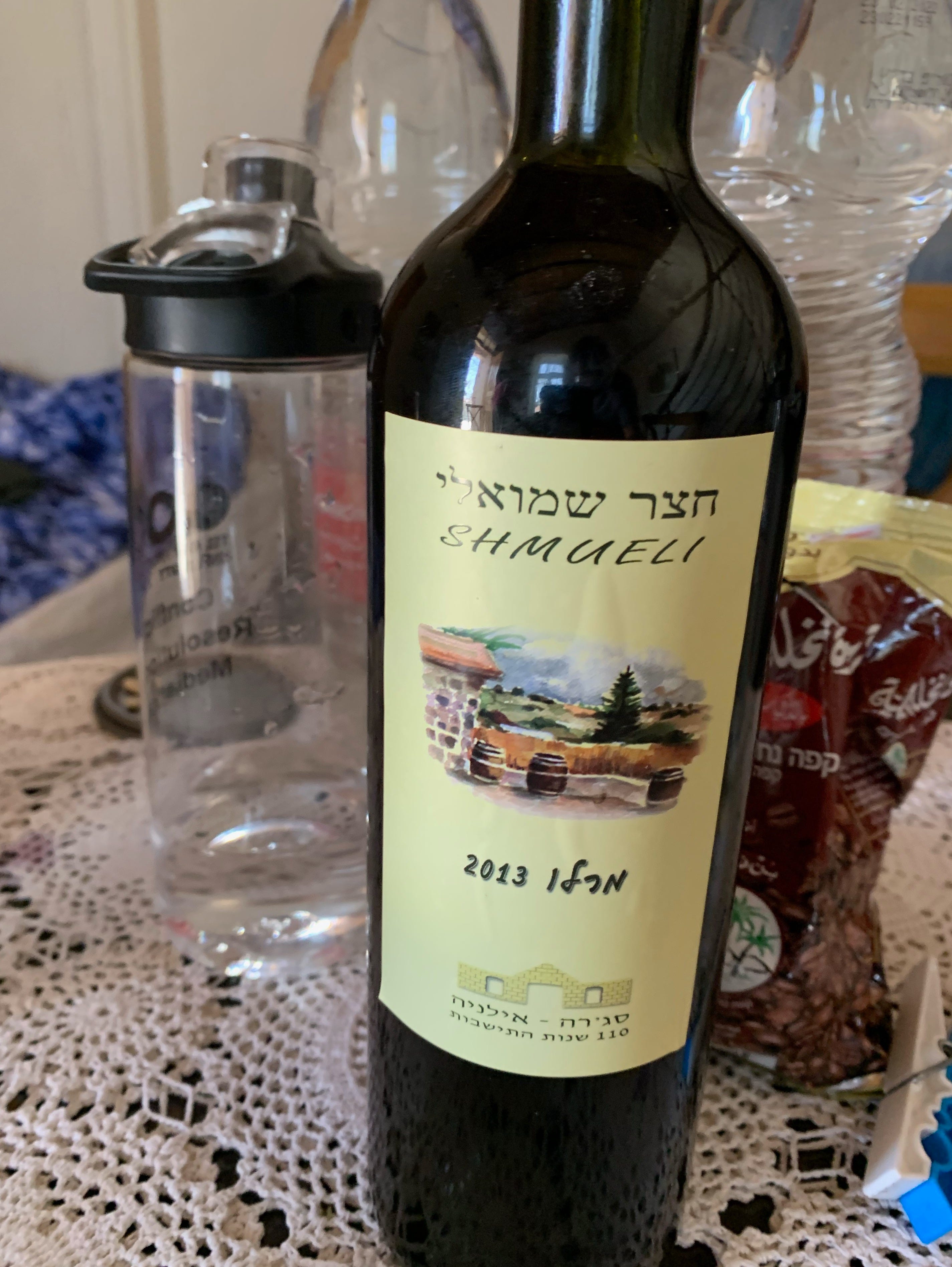
“Guys, let’s sleep here.” I told them. Much to Xiaomin’s chagrin, Rodrigo agreed and we sunk into real beds, forgoing plans to sleep under the stars. I sighed. So much for being “explorers” as Xioamin had envisioned. I didn’t complain. I snack into bed. What a day.
When we needed it the most, the kibbutz popped up out of nowhere, an oasis, a place of rest we desperately needed. We enjoyed breakfast with the family who had the guest room the next morning - eggs and coffee but only matzos with jam. It was passover and bread is not sold in most parts of Israel during the entire 8-day festival, and even secular people honor the custom by avoiding leavened bread. They told us how some of their ancestors were not Jewish but Christian: German Templars, who’d immigrated to what was then the Ottoman Empire, a Protestant Christian group that wanted to be close to the ‘Holy Land’ and “get back to basics” by living simply. They thought “biblical living” in the land of Jesus would advance the return of the Messiah. After WWII, when the British and allied forces had defeated the Nazis and the British Empire still ran the region of Palestine, the Templars were mostly expelled. Somehow this family, who’d married into both Arab Christian and Slavic Jewish families, has been able to remain and later, joined the kibbutz movement. They showed us photos of this little-known group who’d arrived in the land hundred of years ago, setting up farms.
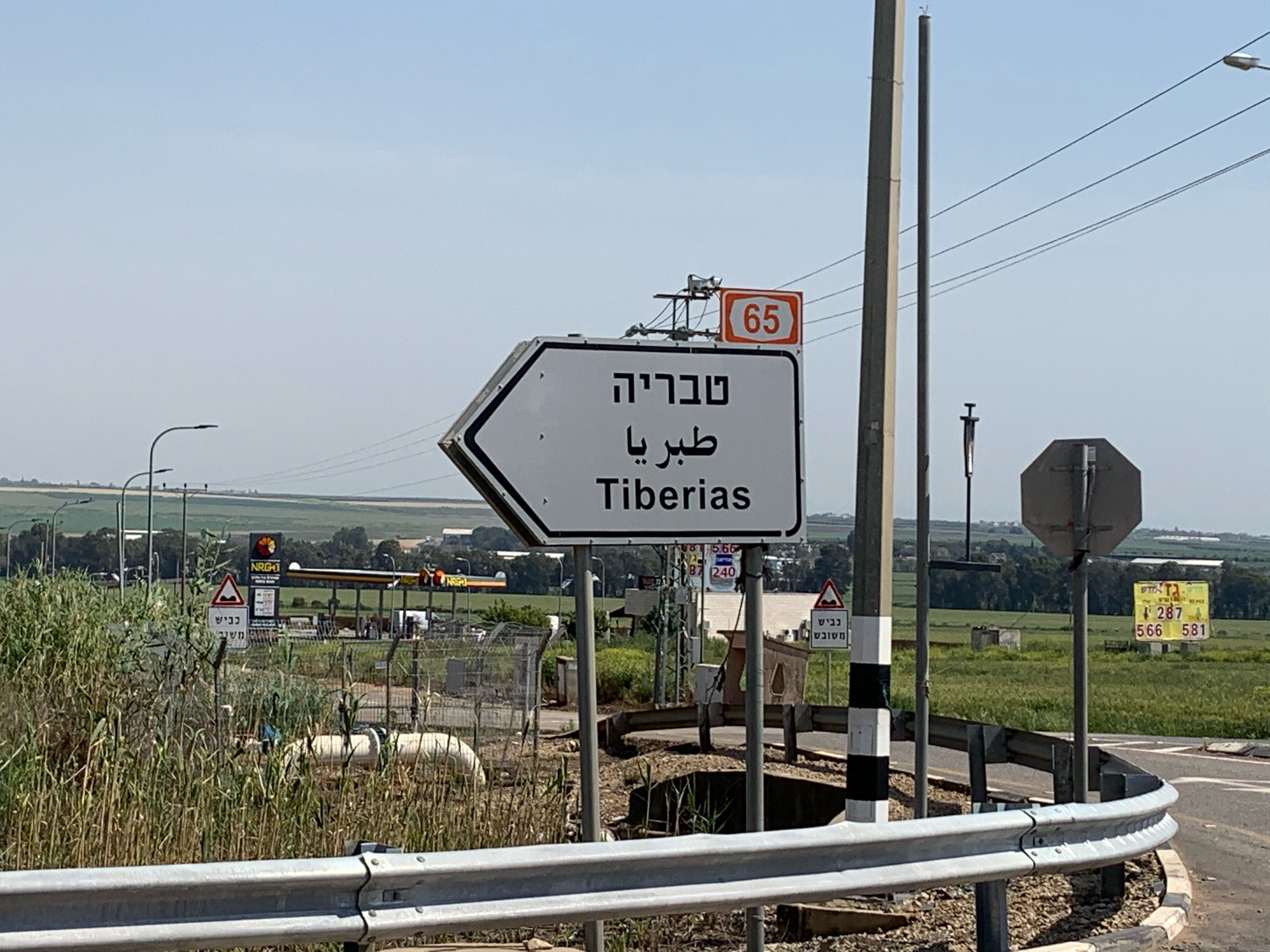
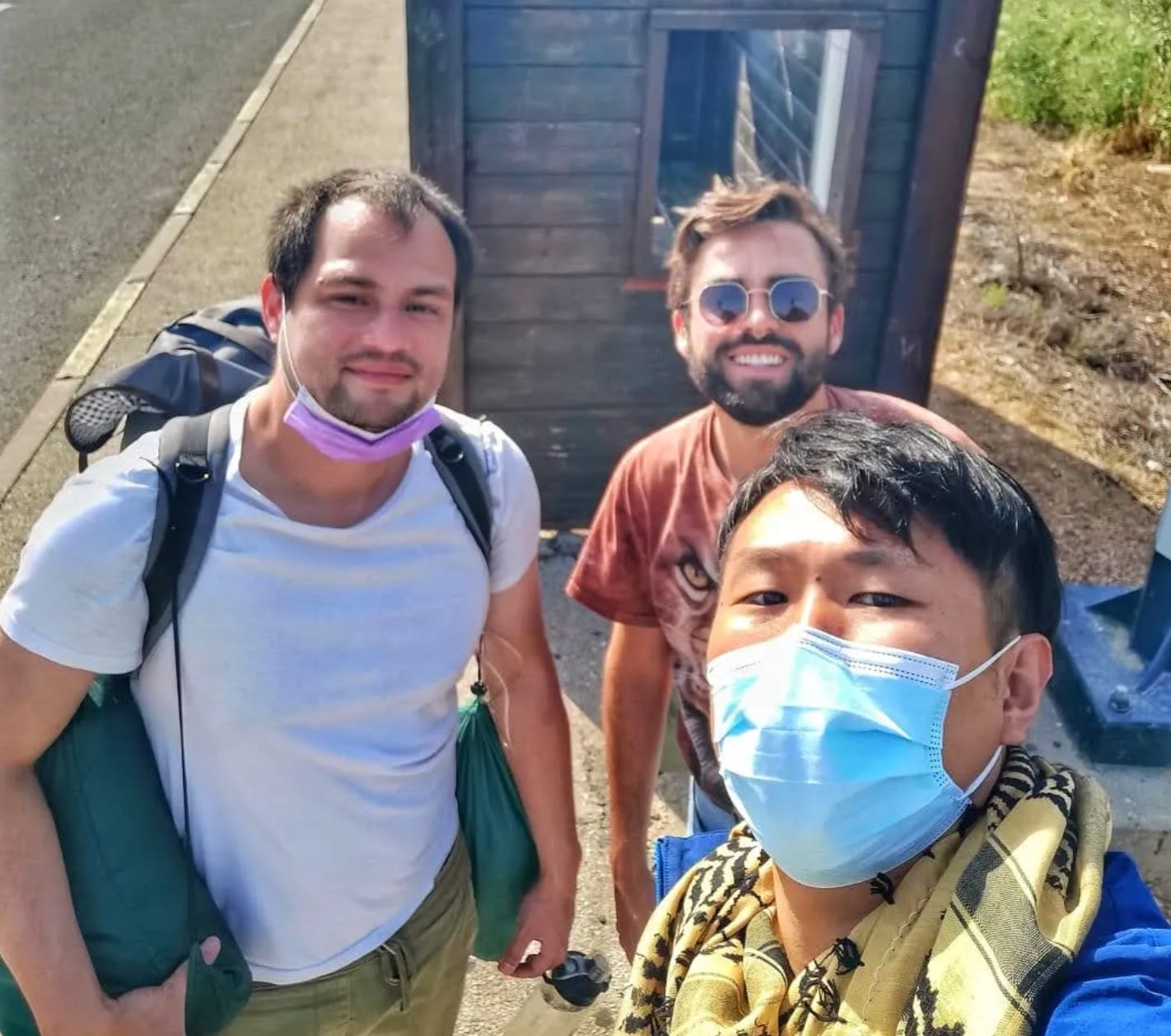
The next day, we continued onward. We walked a bit alongside the country highway, passing drip irrigation fields growing cucumbers and tomatoes. But after a couple hours, we all agreed it was time to take the bus instead. That sunny morning, we continued our journey, but this time at a tiny wooden shelter serving as a bus station. It took as much faster through the city of Tiberias to the Sea of Galilee. When we finally got to the national park at the Sea, it was also closed: the entire national park.
I cannot confirm nor deny but we might have broken-and-entered to pitch a tent and fill up our water bottles. It was colder and windier than you might imagine Israel in April to be. We were in a small field next to a construction site where a visitors’ center was being restored, concealed in trees and shrubs. Xioamin set up his camp stove and heated instant Chinese noddles, perched on a stone path overlooking the Sea. As the sun set, Rodrigo opened our kibbutz wine with his pocket knife, and we took in the vista, the beautiful, flat and wide Sea, expanding as far as the eye could see.
Birds calling, cicadas chirping, a sun once again going down over this place that has meant so much to pilgrims for two millennia, the place Jesus is said to have walked on water, where he called out to Peter, where Peter was given the faith to talk on the waves, but sunk in his own human fallibility and doubt. Peter, first among the disciples, Jesus’s best friend, whom the Bible calls “rock upon which the Church is built” and tradition identifies as the first Pope. Peter, who denied Jesus three times. (The next day, we’d go to Peter’s Church and see the cool, dark, ancient original stone struck of the chapel dedicated to St. Peter and his faith where Jesus called him on the water, not in his perfection and heroism, but in his weakness and sin. At the church, Xioamin sang a Psalm in Chinese and I tried to sing one in German).
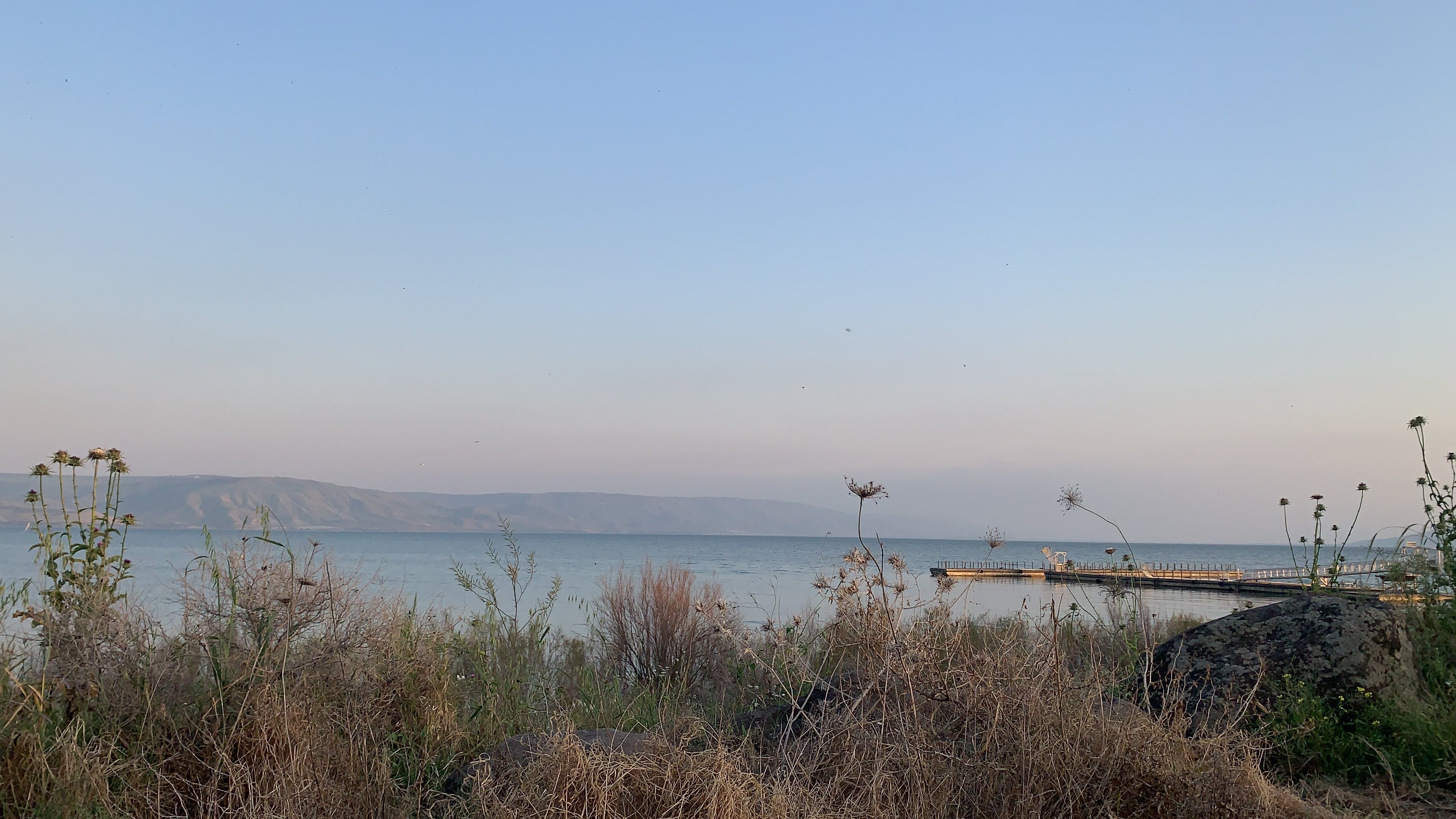
We raised little paper cups of red wine, huddle close to Xiaomin’s gas camping stove for warmth, and cheered to the generosity of the strangers-turned-friends at Kibbutz Ilaniya. The stars in the dark sky were breath-taking. I wandered over to the edge of the water alone, meditated, and asked skyward “God, is this real? Did you come here to walk on water? Do you really have a plan? Do you really love and know us?” fervently looking at the placid and dark waters, spotless with no people nor animals upon them. I half expected to see a sign rise above the water. But nothing. I threw up a prayer for St. Peter’s intercession and asked “St. Thomas, pray for us too, doubting Thomas, you know what it means to doubt and disbelieve.” While I didn’t get any miraculous sign, I looked back at my two friends sitting cross-legged and laughing by the light of the camping stove. Friendship, too, was pretty darn sacred. I was grateful for these guys.
While I’ve never had a big magic moment, I have had little ones. Over and over, little and tender surprises. Through humor, through unexpected grace, through mercy when I do not deserve it. Through being knocked off my ass and a Good Samaritan helping me back up. As my former high school teacher and now friend Juli Warner puts it, there are earthly angels, right here in our midst: people and moments that are too precise and too special to feel accidental. I walked back and sat with my dear friends.
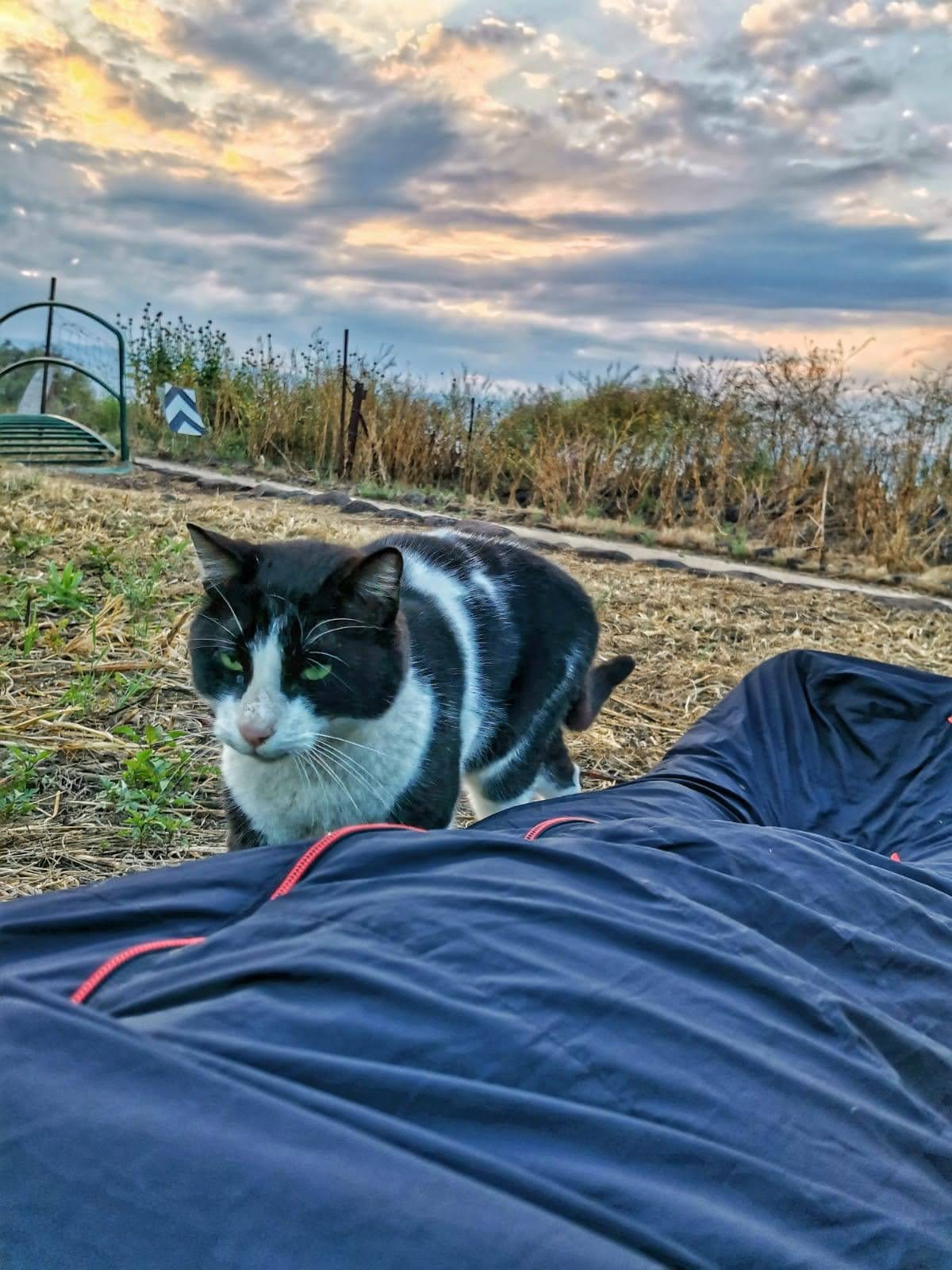
Till late into the night, we drank our wine and ate snacks and hydrated with the water we pilfered from the tap in the under-construction visitor’s center (hopefully it was safe to drink). We slept in the soft, damp grass. In the distance, I heard the bells of a small Orthodox church ringing. I was so tired. Darkness came instantly and I rested dreamlessly, until — poke. poke. poke. It was really dark and it took a moment to get my eyes open, but something was poking my foot! Xiaomin snored softly nearby. I bolted upright. There was a little black and white cat. Whence the poking. I smiled, and scratched his head, reaching into my bag to offer him the crackers from Rodrigo. Here, too, was an omen of goodness of a Divine sense of Humor that knew I loved cats and was happy to have my sleep interrupted by the creature. I smiled. The cat smiled back and jumped into the bag of crackers.
(all images here I took from the trip in 2021, except for the ones that feature me and were taking by Xiaomin)
What an amazing adventure! Love your story.